Cabin Filters 101: What They Do and Why They Matter
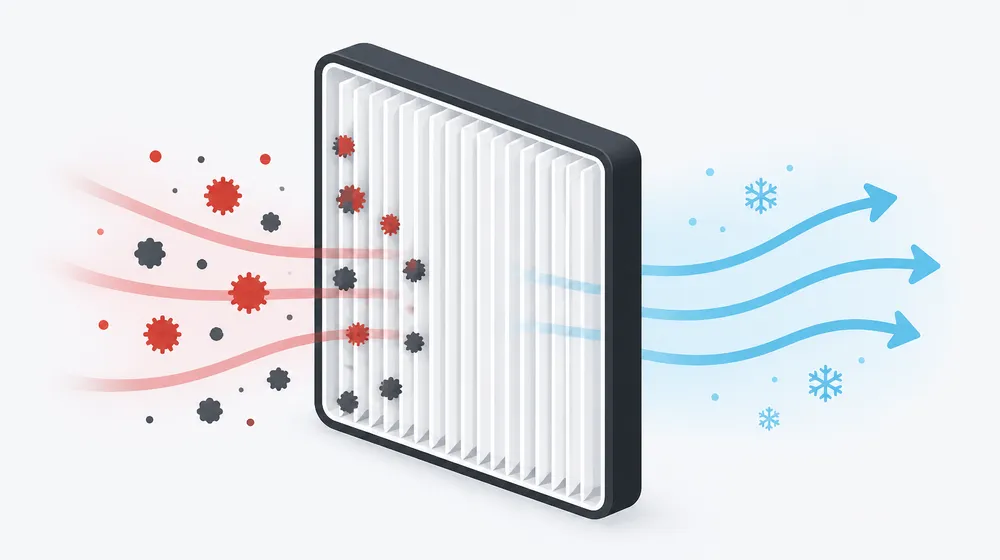
Of everything that affects how your air con feels day to day, the cabin filter is probably the most overlooked — mostly because it’s out of sight, behind the glovebox on most cars, and never comes up unless something’s obviously wrong.
What it actually does
The cabin (or pollen) filter sits between the outside air intake and the vents, filtering dust, pollen and other particles out of the air before it reaches you. Depending on the filter, it may also include a layer of activated carbon to help with odours. It’s a completely separate part from the engine air filter, which filters air going into the engine — mixing the two up is a common (and cheap-to-avoid) mistake.
Signs it needs replacing
- Weaker airflow, even with the fan on full — the filter’s clogged with dust and pollen.
- A musty or stale smell on start-up, especially alongside weak airflow.
- Noticeably noisier fan as it works harder to push air through a blocked filter.
- Visible dust or debris if you look at the filter itself — noticeably grey or matted rather than roughly white.
How often to change it
Most manufacturers recommend every 12,000–15,000km or once a year, whichever comes first. If you drive dusty rural roads regularly, or somewhere with high pollen counts in spring, it’s worth checking more often — the filter simply clogs faster.
Why it’s worth doing alongside a regas or service
It’s a small job on its own, but bundling it in with a regas or full service means the airflow and cooling performance you’re paying to restore isn’t immediately choked by a tired filter. It’s also one of the checks included as standard in our pollen and cabin filter service.
The connection to musty smells
A clogged, damp filter is a common contributor to that musty smell on start-up, alongside bacteria and mould in the evaporator itself. If the smell persists after a filter change, the next step is usually ozone sanitisation to deal with what’s growing further into the system.
It’s a five-minute job with a noticeable result — one of the easiest wins in car maintenance, and one of the most skipped.
Book your car in with Mumford Air Con
Call the workshop or send your details and we'll confirm a time that suits.